by Victoria Trevizo
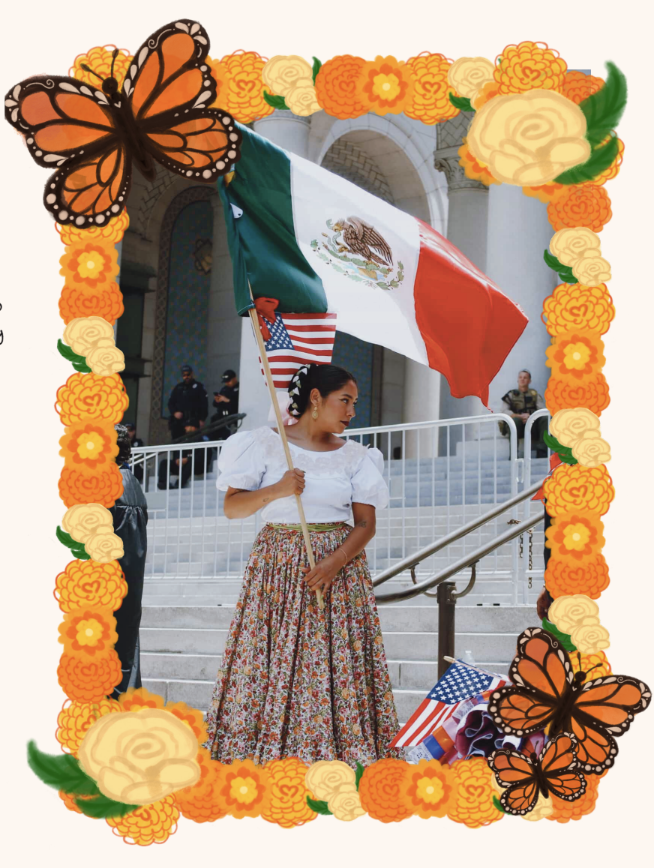
“!Viva Mexico, viva America!” we chanted, standing in front of Los Angeles City Hall, fighting for our identities as Latinos in the United States, standing with heads held high in our folklórico dresses lined with lace, ribbons and tradition. Mariachis passionately played songs of heartbreak, love and pride, fueling our voices and resistance. From the steps of City Hall, police officers stare down above us, watching as we mobilize our traditions into resilience.
For many of us, our parents and grandparents left their beloved homes to journey to America, searching for the “American Dream,” but were met with something completely different. Instead, the color of their beautiful brown skin and native tongues labeled them as criminals. They fought and fought and fought again to give us a life where we did not have to tackle the same battles, or so they thought.
Immigration is not political for me; it is personal. It is a story of survival and leaving everything behind to find a home where you belong and prosper. As a daughter of immigrants, I carry the generations of fear, dreams and tears in everything I do. Folklórico and mariachi are an ode to my grandfather, who loved music; my grandmother, whose grito you can hear from miles away; and my nana, who passed down her love of dance — all of whom migrated from Mexico.
What’s happening right now, the fear, the protests, the ICE raids and the families being torn apart is a continuation of a system built to erase our identities, our culture and our people.The thousands of families that live in fear are unable to live their lives authentically and should not have to live with fear of being seen. For many, the United States is the only home they have ever known, yet we are still being “sent back.” I was blessed to be born here, but folklórico ensures I will never forget my roots. My life exists because someone crossed borders, risking everything so I could have a chance to dream.
Folklórico and mariachi are about telling the stories of our people. If you listen closely to the lyrics, you will find love, sadness or celebration woven into every step and note. They tell the stories that schools do not teach us; stories of field workers, generational love letters written across borders and children growing up between two worlds, yet belonging to both.
Folklórico and mariachi are more than just art forms; they are how we reclaim our space, land and voices. They are acts of love and remembrance. Through our art, we continue our parents’ legacies and heal, which is why they are used in acts of resistance at protests.
Every opportunity, performance and practice I have traces back to my ancestors. I continue the legacy of the generations that came before us. I continue to carry their stories through my art and will never stop telling them.
To every immigrant or child of immigrants
I see your resilience.
I see your pain.
I see your fear.
As a wise man once told me, “échele ganas, mija, keep fighting!”
We belong and will rise together just as our families once did.