By Nicollette Toher
With the rise of tense political and social climates, protests have been increasingly covered by the media. As more people exercise their First Amendment rights, it is essential to know what to wear and how to protect themselves and their identity.
Protesting has been an essential aspect of democratic resistance for centuries, and its presence in American history is a long one. From the Civil Rights movement to the #MeToo movement to the Black Lives Matter movement, people have consistently used their voices to publicly express dissent against societal issues.
As recently as 2025, Americans have taken to the streets en masse to protest issues such as government overreach – via the No Kings Movement, American involvement with Israel, and a targeted increase in deportations.
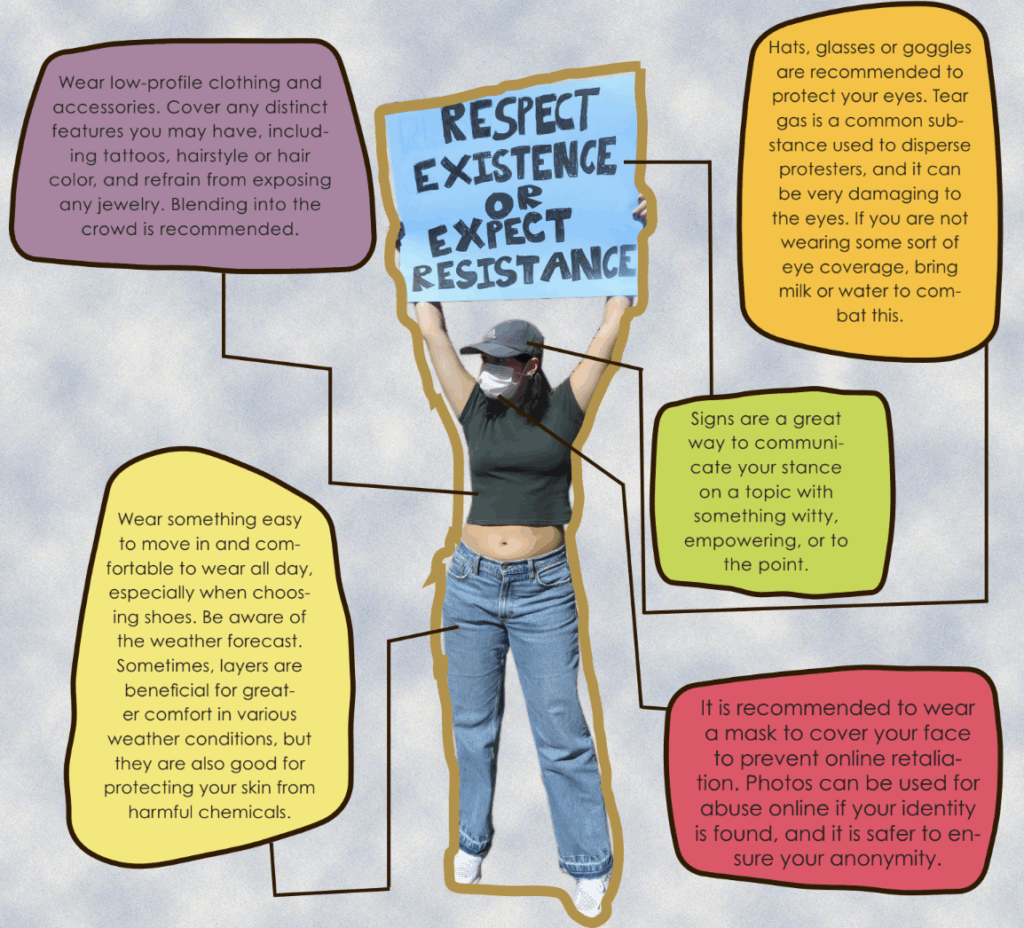
When participating in large protests, certain safety risks can arise. To ensure participant safety, here is what to wear or bring when protesting:
Protests are organized to exercise the First Amendment right of free speech and assembly against something deemed unjust. People participate because they want to make an impact. It may be dangerous — and it is always okay to leave if things escalate to the point of being unsafe — but it is crucial to the foundations of the U.S. to voice opinions freely and advocate for change where needed.